Melissa is an exceptional partner in regional economic development. Her ability to coordinate seamlessly with Alliant Energy ensures that Winnebago and Worth counties are always positioned for growth. She is proactive, deeply knowledgeable, and highly collaborative- bringing her into a project early is a guarantee that things will move forward efficiently and successfully.
— Chad Hansen , Alliant Energy
Winnebago County, IA, Combines Natural Resource Conservation with Recreation, Economic Development
4 May 2026
News, Blog
Natural resource management is important in Worth County too - read about how local leaders balance economic opportunity with conservation.
When Chris Barber thinks about just how much the landscape of Iowa has changed over the last 200 years, his passion for preserving the region’s natural grandeur is only reinforced.
Barber, Director of Winnebago County Conservation, noted that in his county alone, only 15 out of 256,000 acres of native prairie remain unaltered, a phenomenon experienced by the rest of the state, which used to be blanketed by rolling prairies in the 1800s.
On the other hand, when pheasant hunting season arrives, and Barber sees firsthand how much out-of-county and out-of-state visitors impact the local economy, it shines a light on how responsibly enjoying the outdoors can stimulate economic growth.
At the intersection of preserving Winnebago County’s natural resources while strategically leveraging them to promote economic development, Barber gets down to business.
“Having adequate natural resources goes far beyond providing habitat to wildlife,” Barber said. “In 2024, it was estimated that outdoor recreation contributed $4.6 billion to Iowa's GDP. This provides an enormous opportunity at the local level for tourism and economic growth and development.”
“I have personally observed our non-local visitors, campers, hunters, etc., at local restaurants, grocery stores, and gas stations. They bring money from outside the county or state and spend it at local establishments, providing an economic boost to the county,” he said.
The Great Outdoors in Winnebago County
Winnebago County Conservation manages over 3,500 acres of parks, wildlife areas, and recreation in the region. Camping, fishing, hunting, paddle sports, hiking, and bird watching are all recreational activities enjoyed by residents and visitors alike.
Popular recreational destinations in Winnebago County include Dahle Park in Lake Mills, Florence Recreation Area and Trap Shooting Range in Thompson, Grant Wildlife Area in Woden, Rauk-Rasmussen Tract in Forest City, and much more.
Unique to Winnebago County is the area’s high concentration of wetlands. These diverse ecosystems are the perfect example of protected locations that are also responsibly utilized for recreation.
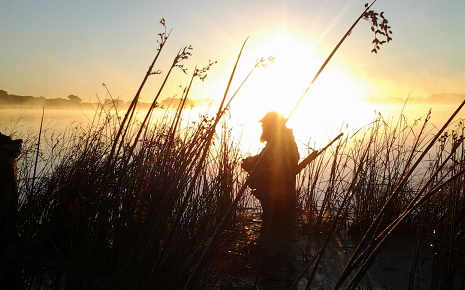
“The wetlands are high in biological diversity, which makes them great for bird watchers, especially during the spring and fall migrations,” Barber continued. “It also provides ample opportunity for waterfowl hunting, and the upland grasslands bordering the wetlands are excellent habitat for pheasants, deer, and turkey.”
The Winnebago River also runs through the region, offering folks even more opportunities to enjoy the outdoors.
“Whether it is enjoying a relaxing paddle in the spring, finding a secluded spot to camp, or enjoying a hike in the lowland forested areas of the county, the Winnebago River provides numerous recreational opportunities,” Barber said.
The New Hanson Nature Center
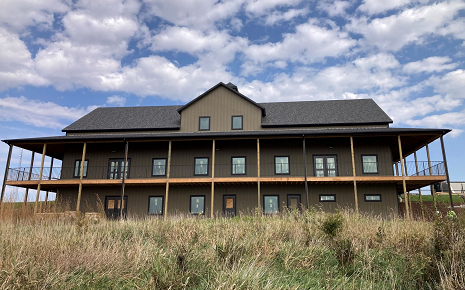
In July of 2024, the $2.3 million, 7,680-square-foot Hanson Nature Center in Leland, IA, was opened to the public.
Envisioned as an asset and gathering place for all of Winnebago County and visitors to the area, the Hanson Nature Center can be utilized for programs, meetings, receptions, and parties.
The Hanson Nature Center fittingly sits atop a hill overlooking 65 acres of wetland and prairie. Inside, visitors will find educational displays about the flora and fauna of north-central Iowa, an interactive Kids Corner, and live animals such as turtles, frogs, and salamanders, allowing children and adults alike to learn about Winnebago County’s natural resources.
In addition, the Hanson Nature Center features an extensive collection of fossils and information on the Indigenous peoples who originally lived in the region.
So far, enthusiasm surrounding the center has been palpable.
“We are currently in the planning and fundraising phase to enhance the educational displays at the nature center, and after only being open for less than two years, we have had visitors from 27 states across the country that have signed our guestbook,” Barber said.
Responsible Stewardship
Preserving every bit of Winnebago County’s natural resources is not a viable option, but neither is unsustainably exploiting them for economic gain.
For Barber and Winnebago County Conservation, the perfect balance is somewhere in between, leaning into education, outreach, and inclusion.
“The public education and awareness that visitors gain by visiting our natural areas, along with the economic benefits of ecotourism, far outweigh the minimal risks to our native plants and wildlife,” Barber said. “All hunting and fishing in Iowa is closely regulated by the Iowa Department of Natural Resources to ensure healthy and stable populations. Furthermore, green spaces and outdoor recreational opportunities rank high in qualities that make a community attractive for residents, visitors, and workforce recruitment.”
For more information, contact Winnebago County Conservation or Winn-Worth Betco. To view a companion story regarding outdoor recreation and conservation in nearby Worth County, click here.
More Topics
Natural resource management is important in Winnebago County, too - read about its economic impact there.When it comes to managing natural resources, local leaders face a balancing act. On one hand, leveraging those resources can yield significant economic benefits, but conservation is key to ensuring residents and visitors alike can...
There is a moment in almost every economic development project that nobody wants to talk about: the moment when the celebration fades and reality sets in. The announcement has been made, the community is excited, and then something surfaces — a $250,000 tap fee, a privilege tax buried in a...
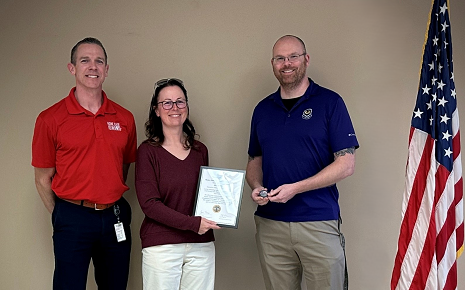
What began more than a decade ago as a vision to better serve veterans across Winnebago and Worth counties came full circle on Tuesday, April 21, 2026, when Melissa Michaelis, Executive Director of Winn-Worth Betco, was surprised with the very first Home Base Iowa Community Champion Award.The award was presented...